

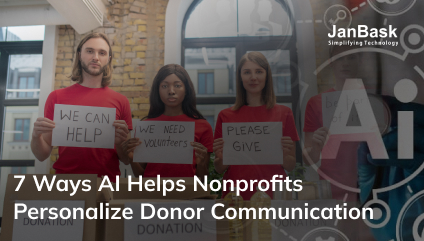
The nonprofit space has always been driven by compassion and community. But as responsibilities grow and expectations rise, many teams find themselves stretched thin. That’s where AI is starting to make a real difference, not as a replacement for people, but as support that helps organizations move faster and stay focused on their mission.
Today, AI gives nonprofits the ability to understand donor patterns, reduce time spent on routine work, and reach the right people with better timing and clarity. And the best part? These tools don’t demand a heavy budget or deep technical expertise. They simply help teams work with more confidence and less guesswork.
In this blog, we’ll walk through seven practical and smart ways nonprofits can use AI right now to strengthen operations, improve communication, and gain a clearer view of the impact they are creating every day.

The AI Advantage for Nonprofits: Why It Matters Now
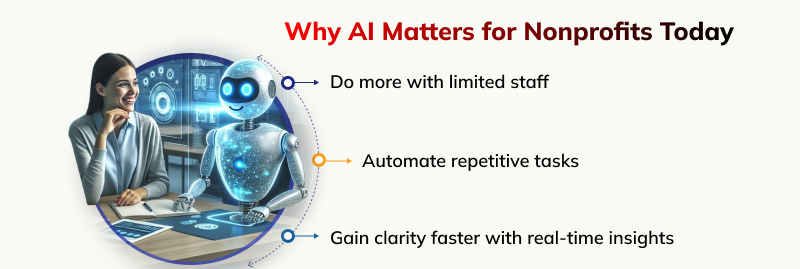
Nonprofits are handling more work than ever, and most teams are doing it with tight schedules and limited staff. That’s why many leaders have started looking at AI not as a fancy add-on, but as a practical helper that takes some weight off their shoulders. It’s already being used by small community groups, local charities, and mid-sized organizations to simplify the work they’ve been doing manually for years.
AI can take care of tasks that usually eat up hours, like sorting donor lists or planning follow-ups. It also helps teams see patterns in their data that would normally go unnoticed. Instead of spending days pulling information together, they get a clearer picture in minutes. That time can then go back into building relationships, improving programs, or responding faster to community needs.
Used wisely, AI becomes more than a tool. It becomes support that helps nonprofits stay steady, plan better, and keep moving forward even when the workload gets heavy.
Smart Ways Nonprofits Can Leverage AI Today
AI isn’t just a tech trend; it’s a practical solution helping nonprofits stretch their resources, strengthen engagement, and measure real impact. Below are seven ways nonprofits can adopt AI right now and see measurable improvements in both efficiency and effectiveness.
1. Smarter Fundraising with Predictive Insights
Fundraising often relies on timing, personalization, and trust. With AI for nonprofits, organizations can now forecast donor behavior, identify high-potential contributors, and design campaigns that truly resonate.
How AI empowers fundraising:
- Predictive analytics helps identify donors most likely to give again or increase their contribution.
- Donor segmentation tools group supporters by engagement levels, interests, or giving frequency.
- Smart recommendations suggest when and how to reach out for higher response rates.
By shifting from intuition to intelligent prediction, nonprofits can raise more funds with less effort, ensuring that every outreach is targeted, meaningful, and backed by data.
2. Personalized Donor Engagement That Builds Stronger Bonds
Every donor wants to feel recognized, not treated like just another email address. Using how nonprofits can use AI, organizations can personalize every interaction from thank-you notes and updates to campaign appeals.
Where AI makes a difference:
- It studies donor behavior to recommend the best communication style or timing.
- Automated systems send personalized messages without losing authenticity.
- Chatbots provide instant, empathetic responses to common questions 24/7.
This level of personalization turns one-time donors into loyal supporters. AI helps nonprofits communicate at scale while still maintaining the warmth and sincerity that builds trust over time.
3. Streamlined Administrative Operations with Automation
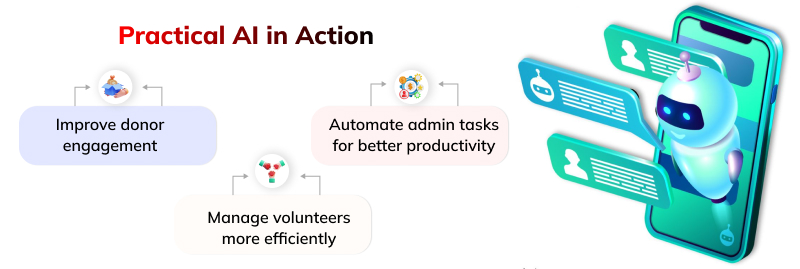
Repetitive administrative tasks can drain nonprofit teams of valuable time. That’s where AI solutions for nonprofits come in, handling time-consuming operations so human teams can focus on mission-driven work.
AI simplifies day-to-day operations by:
- Automating data entry , report generation, and scheduling tasks.
- Managing emails, form responses, and reminders efficiently.
- Keeping donor and volunteer databases updated in real time.
This shift allows small teams to operate like large organizations organized, responsive, and proactive. The result is less burnout, more productivity, and smoother collaboration across departments.
4. Smarter Decisions through Data Analysis
Data is everywhere, but it only becomes valuable when turned into insight. With how AI can help nonprofit organizations, nonprofits can extract meaning from data to make decisions that genuinely drive progress.
Practical ways AI enhances decision-making:
- AI-powered dashboards visualize donor trends, event performance, and fundraising ROI.
- Machine learning models predict community needs or campaign outcomes.
- Real-time data tracking helps identify what’s working and what’s not.
When nonprofits rely on insights instead of instincts, they allocate funds wisely, improve program design, and deliver stronger outcomes for the people they serve.
5. Creative Storytelling and Content Creation with AI Tools
Storytelling is what connects donors to a cause and now, Artificial Intelligence for Nonprofits is making it easier to craft those stories at scale. AI tools can support writing, editing, and even visual creation while keeping messages emotionally compelling.
How nonprofits can use AI for storytelling:
- Generate ideas or first drafts for social media posts, blogs, and newsletters.
- Use language analysis to maintain tone consistency across campaigns.
- Get insights on which stories drive the most engagement and conversions.
This blend of human creativity and machine efficiency allows nonprofits to reach wider audiences faster, keeping storytelling powerful but effortless.
6. Volunteer Management and Recruitment Made Easier
Finding and retaining volunteers can be just as challenging as managing donors. Using AI for nonprofits, organizations can streamline the process from recruitment to recognition and ensure that volunteers feel valued and well-matched to roles.
AI simplifies volunteer coordination by:
- Matching volunteers to roles that fit their skills, interests, and schedules.
- Predicting attendance for upcoming events and planning accordingly.
- Sending automated updates, reminders, and appreciation messages.
By improving how volunteers are recruited, trained, and engaged, nonprofits build stronger, more motivated teams ready to support any initiative with enthusiasm and consistency.
7. Tracking and Reporting Social Impact with Precision
Impact reporting is more than numbers; it’s proof that a mission is working. With how nonprofits use AI, organizations can automatically collect, analyze, and present performance data in ways that resonate with donors, partners, and stakeholders.
AI strengthens impact measurement through:
- Automated dashboards that track results in real time across multiple programs.
- Data visualization tools that turn statistics into clear, compelling visuals.
- Smart reporting systems that help teams prepare grant applications or audits quickly.
When nonprofits can clearly demonstrate results, they not only build donor confidence but also uncover new opportunities to grow their reach and credibility.
Building Ethical and Responsible AI Practices
When nonprofits start using AI, the biggest question usually isn’t about the software itself. It’s about using it the right way. Most teams want the benefits of automation, but they also want to make sure they’re handling people’s information with care. And honestly, that’s how it should be.
Any data that comes from donors or community members needs to stay protected. People deserve to know what’s being collected and why. A simple explanation goes a long way, and it helps avoid any misunderstanding down the road.
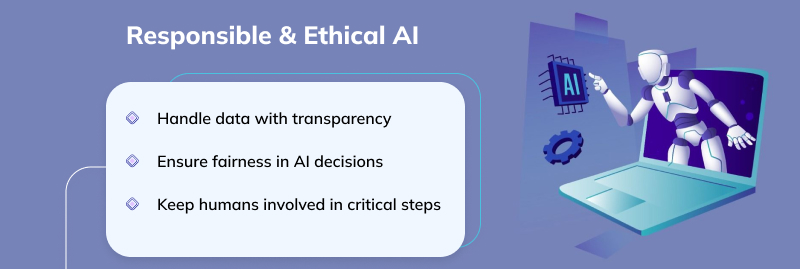
A few things usually help keep AI use on the right track:
Deciding what data is actually necessary and not collecting anything extra.
Checking the system once in a while to make sure it isn’t making odd or unfair decisions.
Keeping a real person involved, especially when the decision affects someone directly.
When nonprofits treat AI as something that must align with their values not just speed or convenience, it ends up working better for everyone. It shows that moving forward with technology doesn’t mean letting go of responsibility.

Conclusion: Turning AI into an Ally for Good
AI isn’t here to take away the human side of nonprofit work. If anything, it gives teams a bit more breathing room so they can focus on the reasons they started this work in the first place. Many nonprofits are already using simple AI tools to manage everyday tasks and make decisions with a bit more clarity, without losing the heart behind their mission.
It could be something small, like organizing donor notes automatically or helping staff understand which outreach efforts are actually working. Even small steps make the day feel lighter, and that’s usually how most teams get started one tool, one routine, nothing too dramatic. Nonprofits that are new to AI can also benefit from an AI consulting service to identify the right tools and build a simple, affordable adoption plan.
AI isn’t a distant idea anymore. It’s something nonprofits can use right now to stay steady in a world that changes faster than ever. When technology takes care of the complex tasks, people finally gain the time and space to focus on work that requires empathy, attention, and genuine human connection.
Ready to accelerate your Artificial intelligence journey?
Talk to a JanBask specialist and get a strategy session tailored to your business.